
Vintage style – More Than Just Old
Some time ago I had a comprehensive discussion about old times. What it was living and how things were made earlier.
I wanted to open up that mystical word a little bit. I hold a certification of interior design, so this topic is rather familiar to me.
But vintage can also be considered as lifestyle, attitude of life – many things.
There is something about a vintage style that is difficult to explain.
You might walk past a modern furniture showroom filled with beautiful things, perfectly arranged, everything clean and new. And then, somewhere in a small antique shop or a flea market, you notice an old leather chair.The leather is worn. The colour has changed over the years. Perhaps one of the legs has a few scratches.
Yet somehow, you keep looking at it.
Why?
Is it the shape? The material? The craftsmanship? Or perhaps the feeling that this chair has been somewhere before you. Vintage has a way of making us pause. And the more you look into it, the more you realize that it is not simply about old things. It is about time, design, quality, nostalgia, and the way we choose to surround ourselves.
But let’s start with the obvious question.
What Actually Is Vintage?
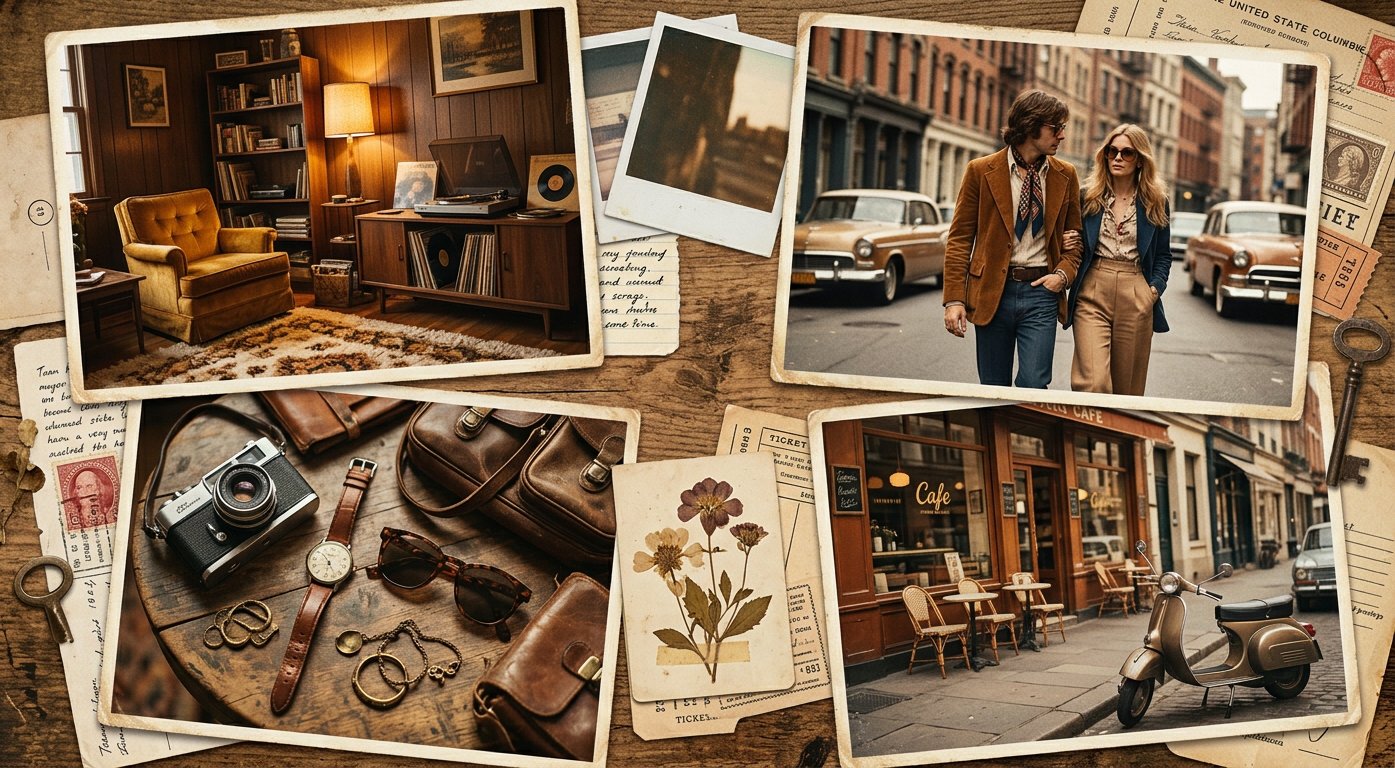
What is vintage?
The word vintage is used rather freely these days. Almost anything with an older appearance can end up being described as vintage.
A new lamp with a 1970s-inspired shade. A freshly manufactured jacket with a retro cut. A modern sofa designed to look as if it has been sitting in someone’s home since 1968. These may be vintage-inspired. They may be retro. But they are not necessarily vintage.
Vintage, in its more traditional sense, refers to an original object from a particular period.
A chair made in the 1960s. A dress from the 1950s. A mechanical watch manufactured decades ago. A teak sideboard that has survived several changes of interior fashion. The object belongs to its time. And that matters.
A 1965 Italian armchair is not interesting only because it is sixty years old. It also reflects the design language, materials, technology, and ideas about modern living that existed in 1965. It tells us something about the period that produced it.
How Old Is Vintage?
There is no single, universally accepted age limit. The meaning also changes depending on whether we are talking about fashion, furniture, cars, watches, or collecting.
Generally speaking, objects from the mid-20th century are very comfortably considered vintage today.
The 1950s, 1960s, and 1970s are especially important in the world of vintage design and interiors. The 1980s have increasingly entered the conversation as well.
The 1990s? That is where things become a little more debatable. Some pieces are already collectible and culturally distinctive, while others are simply… not that old yet.
And this is where vintage differs from antique. Antique usually refers to something considerably older, often around a century or more, although definitions vary.
Vintage is more closely connected to a recognizable period of modern history. And retro? Retro is the look. Vintage is the original.
A new chair inspired by 1960s Italian design can be beautifully made. It can even be better suited to modern life. But it does not carry the same relationship with time as the original. That distinction becomes important once you start looking beyond appearances.
Vintage Style Is a Window into Its Time
One of the things I find most fascinating about vintage is how clearly it reflects the world that produced it.
Furniture, clothing, lighting, and everyday objects are not created in isolation. They are shaped by technology, economics, social changes, architecture, and the way people imagine the future.
Look at the different decades of the 20th century and the differences become quite obvious.
The 1920s and 1930s: Art Deco and the Pleasure of Elegance
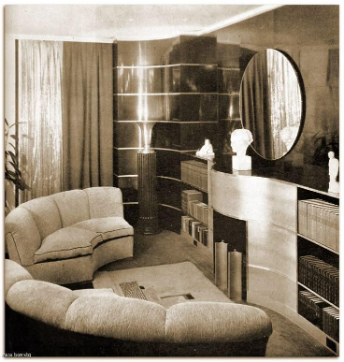
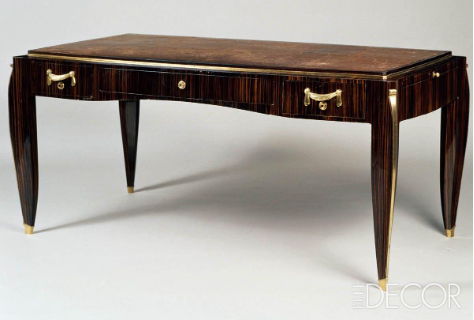
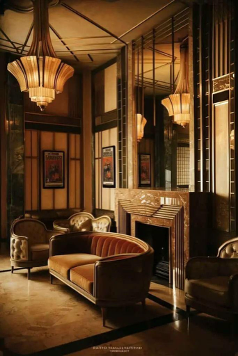
Art Deco is one of the most recognizable styles associated with the earlier vintage period. It is geometric, decorative, and often rather glamorous. Think dark woods, polished surfaces, brass, mirrors, marble, glass, velvet, and strong symmetry. There is a certain confidence to it. A sense that the world should be beautiful, and that everyday surroundings deserve a little luxury.
The colours can be dramatic:
- Black and cream.
- Deep green.
- Burgundy.
- Navy.
- Gold and silver.
- Rich, dark wood.
Art Deco interiors often feel like elegant hotels, cocktail lounges, or sophisticated city apartments. Not necessarily quiet. But composed.
The 1940s: Practicality and Restraint
The 1940s brought a very different atmosphere. War and economic restrictions influenced manufacturing and everyday life. Materials were not always available in abundance, and practicality became more important.
Wood, plywood, metal, and simpler textiles were common. The colours tend to be more restrained: browns, olive greens, beige, grey, and muted blues. There is less of the decorative luxury associated with Art Deco. More function. More necessity. And yet, even in difficult times, design continued to matter. Perhaps especially then.
The 1950s: A Lighter, More Optimistic World
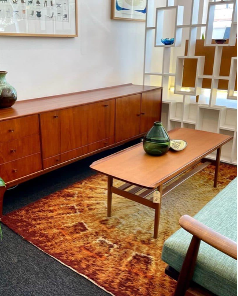
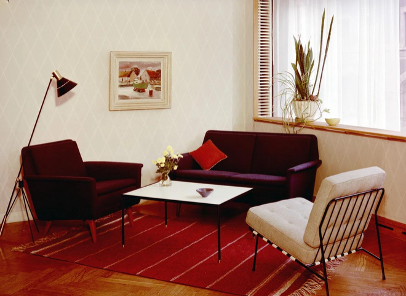
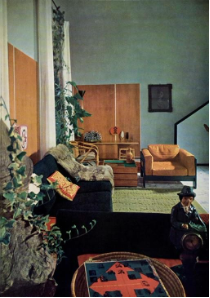
The 1950s are a fascinating period in furniture and interior design. There is a sense of optimism. A belief in progress, modern living, and the possibilities of a new era.
This is where much of what we now call Mid-Century Modern becomes so influential. Furniture becomes visually lighter. Legs become slimmer. Shapes become cleaner, sometimes organic and almost sculptural. Teak, walnut, birch, leather, wool, glass, and brass all play important roles.
The colour palette can be surprisingly varied. Soft pastels sit alongside stronger colours such as mustard yellow, turquoise, olive green, and orange. A typical mid-century interior might include a teak sideboard, a leather armchair, a simple coffee table, and a well-designed lamp.
Nothing necessarily looks extravagant. But the proportions are often excellent. And that is one of the reasons the style has survived so well.
The 1960s: The Future Comes Home
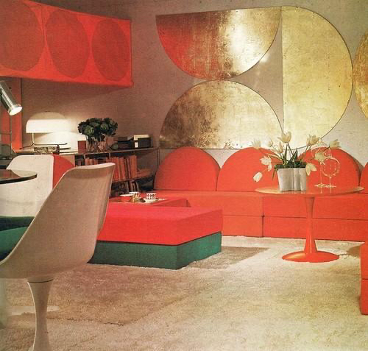
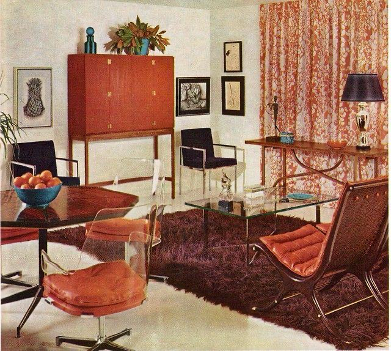
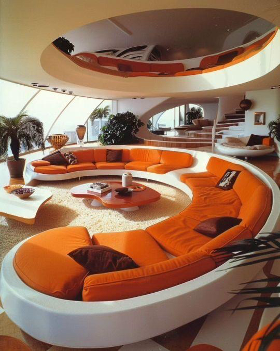
The 1960s brought a stronger sense of experimentation. New materials and manufacturing techniques opened up possibilities that had not existed before. Plastic, fibreglass, chrome, steel, and coloured glass became part of the design vocabulary.
Furniture could be rounder, more playful, more futuristic. Some pieces looked as though they belonged in a space station rather than a living room. The Space Age aesthetic emerged from this fascination with technology, science, and the future. Oranges, bright yellows, red, turquoise, and olive green appeared alongside white, chrome, and black. It was a period that believed tomorrow would be different. And perhaps more exciting.
The 1970s: Warmth, Nature, and a Little More Comfort
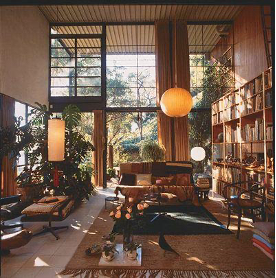
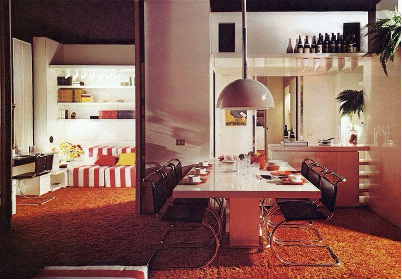
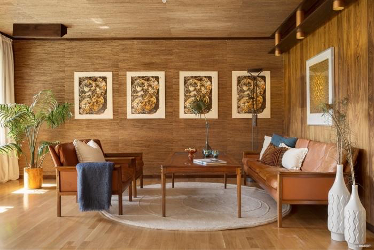
Then came the 1970s. The atmosphere changes again. The sharp optimism of the previous decade softens into something warmer and more grounded. Wood becomes prominent. Leather, wool, cork, rattan, ceramics, and brass all find their place.
The colours are unmistakable:
- Brown.
- Cognac.
- Terracotta.
- Ochre.
- Mustard yellow.
- Olive green.
- Warm cream.
There is something almost instinctive about the appeal of a 1970s interior. It feels warm, tactile, and lived in. A leather sofa. A wooden sideboard. A wool rug. A large plant. Soft lighting. It can be wonderfully inviting.
Of course, it can also become rather too brown if you are not careful. But that is part of the fun of understanding a style. You begin to see which elements are worth bringing forward and which are better left in their original decade.
Quality: Was Everything Really Better Before?
This is where vintage conversations often become a little romantic. People say things like: “They don’t make things like they used to.” Sometimes, there is truth in that. Sometimes, it is simply nostalgia talking.
Modern manufacturing can produce exceptionally good materials, precise construction, and highly durable products. Technology has improved enormously. But certain older objects do have qualities that are less common in today’s mass market.
Take a well-made vintage piece of furniture.
It might have:
- Solid wood.
- Proper joinery.
- Good-quality leather.
- Wool upholstery.
- Brass fittings.
- A carefully considered structure.
- Materials selected to age rather than simply survive a few years.
Not every old chair was well made, of course. There was plenty of cheap furniture in the past too. We tend to forget that. The poor-quality objects disappeared, while the better ones remained. This is known as survivorship bias. Still, when you come across a beautifully made vintage piece, you can often see why it has lasted. And there is another quality that cannot really be manufactured.
The object has already lived through time.Patina: When Age Becomes Part of the Beauty
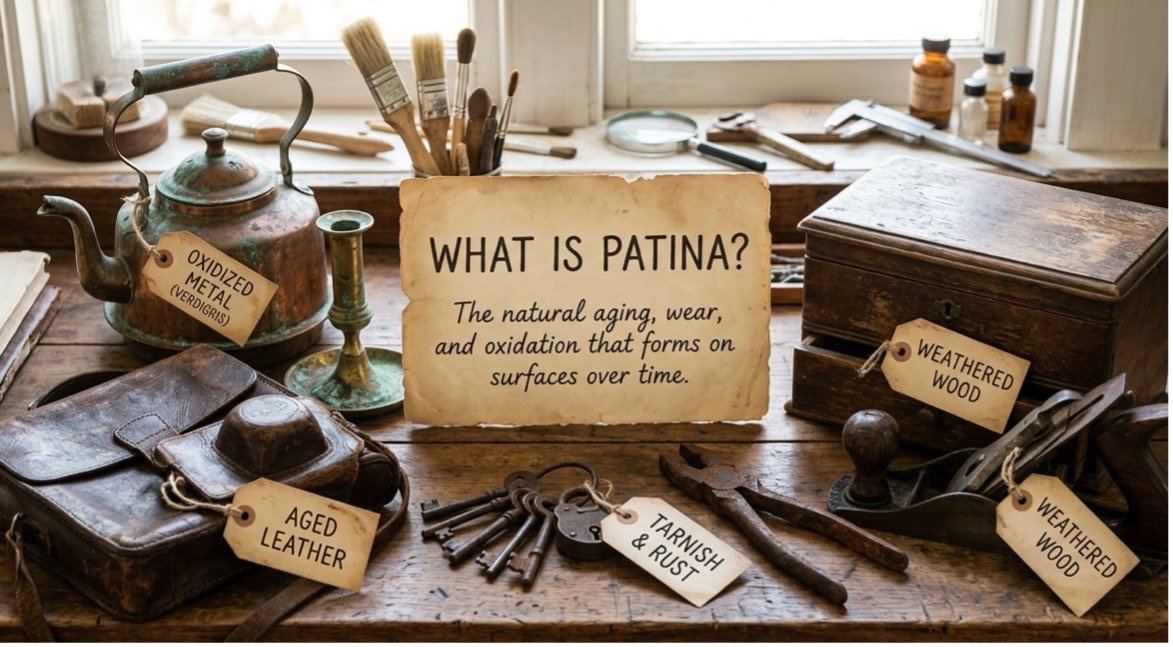
What is patina
There is a difference between something being worn out and something having developed character.
That difference is often called patina. Leather becomes softer. Wood deepens in colour. Brass loses its original shine and develops a warmer, darker surface. Paint acquires small marks from years of use. These changes can make an object more beautiful.
Not always, obviously. Sometimes wear is simply damage. But good patina gives a piece a sense of authenticity. A new leather chair can be beautiful. A fifty-year-old leather chair, softened by years of use, may feel entirely different. You can see it. You can touch it. It does not need to pretend to be old. It is old. And perhaps that is what makes it so appealing.
Nostalgia: The Feeling Behind Vintage style
Vintage is not only about design and materials. It is also about emotion.
Nostalgia plays a significant role in why we are drawn to objects from the past. But nostalgia does not necessarily mean remembering our own childhood. You can feel nostalgic for a time you never experienced.
A man like me, born in the 1970s might love the look of a 1950s Italian café. Someone born in the 1990s might feel drawn to 1960s furniture. A person who has never lived in Italy might still feel an emotional connection to its mid-century design.
Why?
Because nostalgia is not always about what actually happened. Sometimes it is about what we imagine happened. We picture a slower life. A more personal home. Better materials. Less disposable consumption. We imagine sitting in a café where the furniture has been there for decades, drinking coffee from a proper cup, perhaps reading a newspaper.
The reality of the past was, naturally, much more complicated. People had their problems. Their homes were not always beautiful. Their furniture was not always well made. But the image remains attractive. And that tells us something about ourselves. Perhaps vintage allows us to connect with a version of life that feels more tangible, more personal, or simply less rushed.
Vintage in the Home: More Than a Look
Vintage interiors are often described through their colours and furniture. Teak. Leather. Brass. Wool. Rattan. Brown. Olive green. Terracotta. All of these are useful clues. But a successful vintage interior is not simply a collection of old-looking things. It is about creating a relationship between objects. And this is where the difference between a beautiful vintage home and a themed room becomes quite clear.
The Vintage Museum Problem
Have you ever seen a room where absolutely everything belongs to the same decade? The furniture, wallpaper, curtains, lamps, artwork, ornaments…
You can almost imagine a little sign on the wall:“Welcome to 1974.”
There is nothing inherently wrong with that. If you love the period, why not? But for everyday living, it can sometimes feel a little too deliberate. A home is not a museum or theme park.
It is a place where people live, work, relax, eat, argue, laugh, and occasionally leave a cup of coffee somewhere they shouldn’t. The most interesting vintage interiors often combine different periods and styles. A modern sofa with a vintage teak sideboard. A contemporary dining table with an old Italian chair. A 1960s lamp beside a modern piece of art. A vintage mirror in an otherwise simple room.
The result feels more natural. More personal. And perhaps more sophisticated.
The Beauty of Restraint
You do not need an entire vintage interior to create a vintage atmosphere. Sometimes one good piece is enough. A beautiful old lamp. A wooden chest. A leather armchair. A vintage clock. A piece of ceramics. Or an old painting.
The key is not how much vintage you own. It is how well the pieces belong together.
Different Vintage Styles, Different Personalities
One of the most interesting things about vintage is that it gives you a huge range of directions. You can love the elegant geometry of Art Deco and still enjoy the warmth of 1970s interiors. You can appreciate Scandinavian simplicity while being drawn to Italian design. You can combine these influences, provided there is some connection between them.
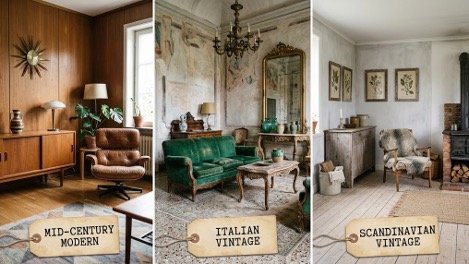
Mid-century, Italian, Scandinavian
Mid-Century Modern
Probably the most familiar vintage design language today.
Main characteristics:
- Clean lines.
- Organic shapes.
- Slim legs.
- Teak and walnut.
- Leather and wool.
- Functional design.
- Visually light furniture.
The atmosphere is modern, calm, and considered. It works particularly well when combined with contemporary architecture.
Italian Vintage
Italian design deserves a special mention. There is something distinct about the way Italian designers approached furniture and interiors in the mid-20th century.
Often more expressive than Scandinavian design. Sometimes more luxurious. Sometimes more playful. You find sculptural chairs, elegant lighting, beautiful leather, marble, chrome, and strong attention to proportion. Italian interiors can be minimalist, but they rarely feel cold when the materials are chosen well. A vintage Italian chair can be a piece of furniture and a small work of art at the same time.
Scandinavian Vintage
Scandinavian vintage tends to be quieter. Natural materials, functional forms, simple lines, and a strong connection to everyday living. Wood is central. So are good proportions and practical design. The atmosphere is usually calm, warm, and understated. And because of its simplicity, Scandinavian vintage combines beautifully with modern interiors.
1970s Vintage
More expressive, more tactile, more earthy. Brown leather. Wood. Wool. Rattan. Ceramics. Warm lighting. It can feel wonderfully relaxed. The challenge is to avoid making everything the same shade of brown. A little contrast goes a long way.
Art Deco Vintage
For those who enjoy elegance, glamour, and a stronger decorative character. Dark wood, brass, velvet, marble, mirrors, geometric shapes. It is a style that can feel luxurious without necessarily being excessive. Especially when the colours are controlled.
Vintage and the Question of Taste
There is something else worth considering. Why do some people love vintage while others see only old furniture? The answer is partly personal taste, of course. But it is also about what we notice.
Some people respond to colour. Others to shape, material, history, or craftsmanship. A vintage object can be appreciated in several different ways. You might love the way it looks. You might love the way it feels. You might appreciate who designed it. Or you might simply enjoy the fact that it has survived. None of these reasons is more correct than the others. The beauty of vintage is that it leaves room for personal interpretation.
Vintage Fashion: When the Past Becomes Personal
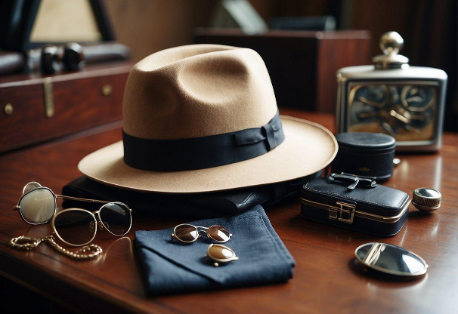
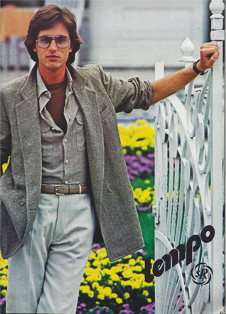
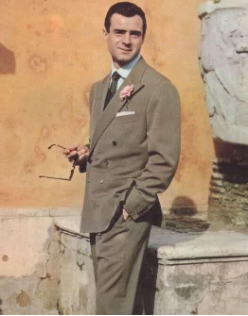
Vintage clothing works in much the same way as vintage interiors. The original garment comes from a particular period, and its design reflects the ideas and habits of that time. But unlike furniture, clothing is worn directly on the body. That makes it especially personal.
A vintage jacket can change the way you stand. A pair of high-waisted trousers can change your silhouette. A particular pair of shoes can change the whole feeling of an outfit. And perhaps this is why vintage fashion is so appealing to many men. Classic menswear has retained many of its essential elements over the decades.
1930s and 1940s
Broad shoulders, high-waisted trousers, pleats, wide lapels, double-breasted suits, waistcoats, and classic leather shoes. Hats were a much more ordinary part of everyday clothing. The silhouette was structured and masculine.
1950s
A more polished, tailored appearance. Well-cut suits, narrower ties, high-waisted trousers, loafers, leather jackets, and knitwear. There is a certain ease to the decade when done well.
1960s
This is where Italian style becomes particularly interesting. Slimmer silhouettes. Shorter jackets. Fine knitwear. Loafers. Turtlenecks. Elegant tailoring. The look can be very refined without being stiff.
1970s
Broader collars, flared trousers, suede, leather, corduroy, knitwear, and stronger colours. A more relaxed, expressive approach. And yes, sometimes a little too much. But when handled well, it can be excellent.
The Accessories Often Tell the Story
With vintage fashion, accessories can be just as important as the clothing itself.
A mechanical watch.
A leather belt.
A silk scarf.
A classic pair of sunglasses.
A fountain pen.
A leather briefcase.
A hat.
A pair of well-made shoes.
These details can give an outfit character without making it look like a costume. And that is important. You do not need to dress entirely in vintage clothing to enjoy vintage style. A modern navy blazer with a vintage watch and a beautiful leather belt can look more natural than a complete outfit copied from 1965.
The best vintage-inspired style usually feels lived in, not performed.
Vintage, Classic, and Retro: Three Different Ideas
These terms are often used interchangeably, but they are not quite the same.
Vintage refers primarily to age and origin.
Classic refers to something that has lasting appeal and remains relevant.
Retro refers to an aesthetic inspired by the past.
A 1960s Italian leather chair is vintage. A modern chair designed in a timeless Italian style is classic. A new chair with a bright orange shell and chrome legs, inspired by the 1960s, is retro. Of course, an object can be all three. A vintage piece can be classic in design and retro in the way it is used today. But the distinctions are useful. They help us understand what we are actually looking for.
What Makes a Vintage Piece Worth Keeping?
This is where the subject becomes especially interesting for anyone who enjoys collecting, furnishing a home, or simply buying fewer but better things.
Age alone is not enough. I would look at several things.
1. Origin
Who made it? Where was it produced? Was it designed by someone significant, or is it simply an anonymous object with a nice appearance?
2. Period
Does it genuinely belong to the period it appears to represent? This matters especially with furniture, watches, and design objects.
3. Materials
Solid wood, good leather, wool, brass, glass, and quality ceramics can all contribute to long-term appeal.
4. Construction
How was it made? Look at joints, stitching, fittings, mechanisms, and the overall structure.
5. Design
Does it still look good? This is subjective, of course. But some objects have proportions and shapes that remain attractive for decades.
6. Patina
Has time added character? Or has the object simply deteriorated? A little wear can be beautiful. Too much can make the object impractical. And sometimes the most valuable quality is not rarity or brand. It is simply that the object is genuinely good.
The Larger Appeal of Vintage
Perhaps vintage attracts us because it offers something that modern consumer culture often lacks. A sense of continuity. We live in a world where objects are replaced quickly. Furniture, electronics, clothing, cars. The new model is always waiting.
Vintage suggests another way of thinking. An object can stay with you. It can move from one home to another. From one generation to the next. It can be repaired, adapted, and used again.
A leather chair can become softer.
A wooden table can develop a richer surface.
A mechanical watch can be serviced and continue ticking.
A well-made jacket can remain part of your wardrobe for decades.
This does not mean that everything old is better.It means that some objects deserve more time than we usually give them.
A Few Thoughts About Vintage
Perhaps the most interesting thing about vintage is that it is not really about the past. Not entirely. It is about the relationship between the past and the present. It is about what we choose to keep, what we choose to admire, and what we believe is worth carrying forward.
A vintage chair is not just a chair from another decade. It is a piece of design history.
A vintage watch is not just an old watch. It is a small example of engineering, craftsmanship, and time.
A vintage garment is not just an old piece of clothing. It is a reflection of how people once understood elegance, comfort, and identity.
And when we bring these things into our homes or our wardrobes, we give them another chapter. That, to me, is part of the real beauty of vintage.
It does not ask us to live in the past.
It invites us to bring something worthwhile from the past into the life we live now.
Some images of vintage life you can see here on Pinterest