
Slow Living – Live Your Life
Slow Living: What Southern Europe Can Teach Us About a Better Life
There is a familiar scene that plays out every morning across much of Northern Europe. Coffee is poured into a travel mug. Breakfast is eaten while answering emails. The calendar is already full before the day has truly begun. Somewhere between meetings, notifications, and endless multitasking, life quietly becomes something we race through instead of something we actually experience.
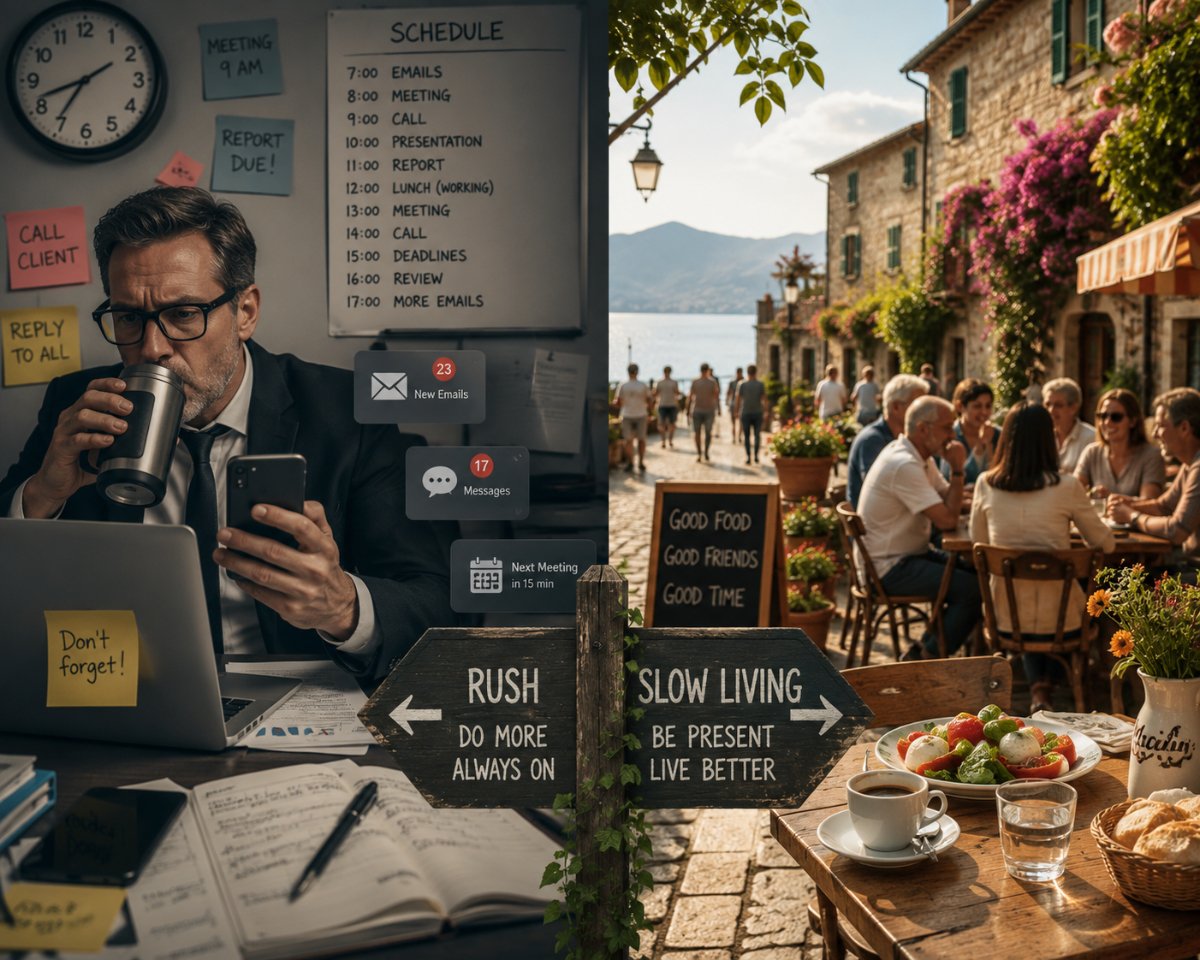
Yet, just a few hours south, the rhythm is often remarkably different.
In a small Italian town, a local baker greets customers by name. Friends linger over lunch long after the plates have been cleared. As evening approaches, families step outside for the traditional passeggiata, an unhurried walk through the streets, not to burn calories or reach a destination, but simply to enjoy the evening together.
It raises an interesting question.
What if the secret to living well isn’t doing more but experiencing more of what we already do?
The Quiet Revolution Called Slow Living
Slow living isn’t about moving slowly or becoming less ambitious. It isn’t an excuse for laziness or avoiding responsibility. Instead, it is a conscious decision to replace constant acceleration with intentional living.
The philosophy has its roots in Italy during the 1980s, when the Slow Food movement emerged as a response to the growing culture of fast food. Rather than treating meals as fuel consumed on the run, it celebrated local ingredients, traditional recipes, and the simple pleasure of sharing food around a table.
Over time, this idea grew into something much larger.
Today, slow living encourages us to value quality over quantity, presence over hurry, and meaningful experiences over endless productivity. It asks us to question a belief deeply rooted in modern society, that our worth is measured by how busy we are.
Perhaps it isn’t. Why We Are So Tired
Many of us wear busyness like a badge of honor. Full schedules are admired. Constant availability has become the norm. Even moments that were once peaceful are now filled with scrolling, replying, and consuming more information. And the answers are expected immediately.
The result is predictable.
Stress has become one of the defining features of modern life. Professional pressure, digital overload, and the feeling of never quite catching up leave many people mentally exhausted before the day is over.
Ironically, the pursuit of maximum productivity often produces the opposite. The more we divide our attention, the less focused, creative, and satisfied we become.
One Thing at a Time. One of the simplest lessons from slow living is surprisingly difficult to practice. Do one thing. Not three. Not five. Just one.
Read without checking your phone every few minutes. Drink your morning coffee without answering messages. Finish one task before beginning the next.
This practice is sometimes called monotasking, allows our attention to settle completely on the present moment. Instead of constantly switching between tasks, our minds experience a sense of calm that multitasking rarely provides.
The result isn’t simply greater productivity. It is greater enjoyment.
The Forgotten Ritual of Eating Together.
Perhaps nowhere is the philosophy of slow living more visible than around the dining table.
In much of Southern Europe, meals remain social rituals rather than necessary interruptions. Lunch isn’t something squeezed between meetings. Dinner isn’t eaten while watching television or scrolling through social media.
People gather. They talk. They laugh. They stay. They truly are present. Food becomes less about calories and more about connection.
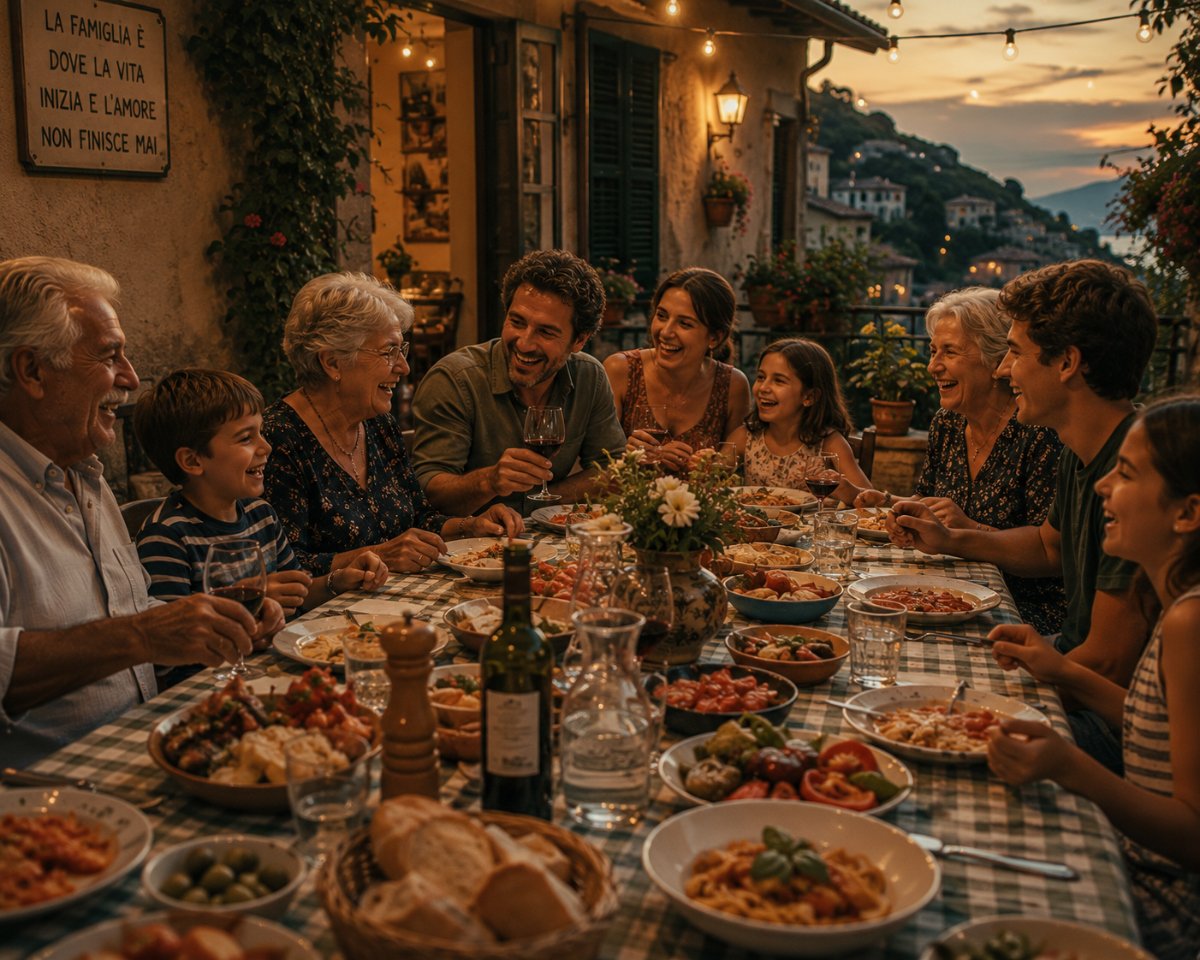
Gathering together and enjoying slow dinnerg
The ingredients matter too. Weekly open-air markets, seasonal vegetables, fresh herbs, local cheeses, and family recipes all reinforce the idea that eating well begins long before the first bite.
Cooking from scratch becomes less of a chore and more of a creative act. And perhaps the most refreshing ingredient of all?
No phones on the table.
Rediscovering Nature’s Rhythm
Modern life often asks us to ignore the seasons. Work continues at the same pace whether it is January or July. Artificial lighting extends our days long after sunset.
Slow living gently suggests another way.
Spend time outdoors every day, even if only for a short walk. Notice the changing light. Adapt hobbies and routines to the rhythm of the seasons instead of fighting against them.
In Italy, the evening passeggiata remains a cherished tradition. It isn’t exercise in the conventional sense. It is a daily pause, a chance to breathe, reconnect with family and neighbors, and transition peacefully from work to evening.
Sometimes the most productive thing we can do is simply go for a walk.
Owning Less, Enjoying More.
Slow living also changes the way we consume.
Instead of constantly replacing possessions, it encourages us to buy fewer things but choose them well.
A well-made jacket that lasts twenty years. A leather bag that grows more beautiful with age.
Piece of furniture that can be repaired rather than discarded.
The same mindset extends beyond shopping.
Travel by train instead of rushing through airports. Learn a craft. Tend a garden. Bake bread. Read real books. Discover hobbies that reward patience instead of speed.
Some of life’s richest experiences simply cannot be rushed.
Real Wealth Is Human Connection
Perhaps the greatest lesson Southern Europe offers isn’t about food or schedules at all.
It is about relationships. Relationships and social connections are also crucial important for longevity.
Many communities naturally create opportunities for conversation, whether over coffee, at the local market, during evening walks, or through multi-generational family life.
These moments are easy to underestimate. Yet genuine human connection remains one of the strongest protectors against stress, loneliness, and emotional burnout. A shared meal, a meaningful conversation, or simply being fully present with another person often does more for our wellbeing than another hour spent online.
In an age of constant digital connection, real presence has quietly become a luxury.
A few small changes can change everything
The beauty of slow living is that it doesn’t require moving to Tuscany or retiring to a Mediterranean village.
It begins with surprisingly ordinary choices.
Leave your phone in another room during dinner.
Walk after meals instead of reaching for another screen.
Visit a local market and cook with fresh seasonal ingredients.
Protect time that remains intentionally unscheduled.
Learn to say no to commitments that add pressure but little meaning.
Practice gratitude before ending the day. None of these changes seem dramatic.
Together, however, they gradually transform the rhythm of everyday life.
Slowing down isn’t falling behind
Perhaps the biggest misunderstanding about slow living is that it means accomplishing less.

What is enough? Before is too late
In reality, many people discover the opposite.
When we stop scattering our attention across dozens of priorities, we often work with greater clarity. Creativity returns. Stress decreases. Conversations become richer. Rest feels restorative again.
Life becomes something we participate in instead of something we constantly chase.
Maybe that is the real lesson hidden in the cafés of Italy, the village squares of Spain, and the coastal towns of Greece.
They remind us that a meaningful life isn’t built from speed. It is built from moments fully lived.
The art of slow living doesn’t require a passport.
Sometimes it begins with something as simple as putting your phone away, taking a deep breath, and truly being where you already are.
See also what is post career identity shift.
I found a good page about slow-living hobbies. Take a look and grab some ideas.
Why not start today?
Images created in cooperation with AI