
Cycling is more than just a sport or a hobby; it’s a lifelong companion. From childhood to your 90s, it remains one of the few activities that grows with you, adapting to your needs and abilities. As aging researchers emphasize, cycling isn’t merely exercise; it’s a powerful tool for preserving your “healthspan”, the years of life spent in vibrant physical and cognitive health.
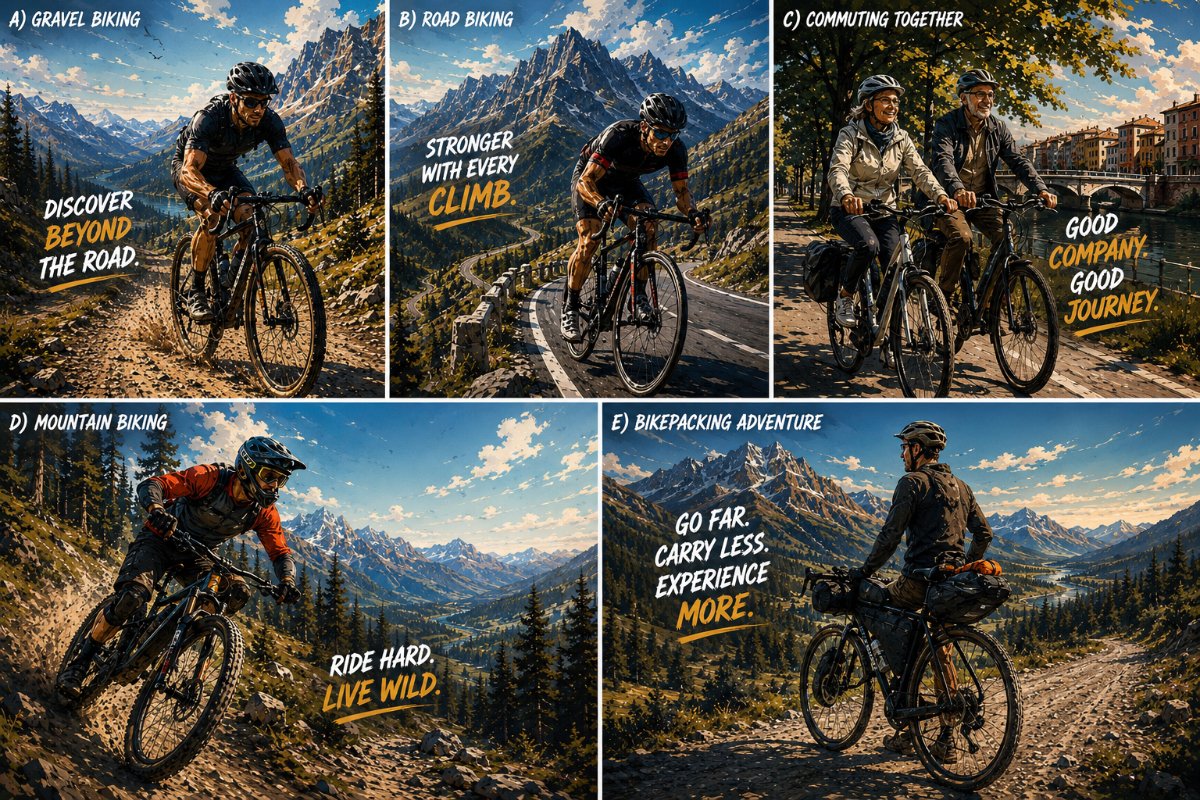
Different occasions for cycling
Why Cycling Stands Out for Longevity
Thinking of individuals like me, not so your rookie anymore. Unlike high-impact sports, cycling offers a unique blend of cardiovascular training with minimal joint stress. Aging brings inevitable changes: declining aerobic capacity (VO₂max), loss of muscle mass (particularly fast-twitch fibers), reduced balance, slower recovery, stiffer blood vessels, and decreased brain plasticity. Yet, regular cycling slows every one of these processes, making it a cornerstone of proactive aging.
How Cycling Benefits Your Body and Mind
Heart and Circulation: A Stronger, More Resilient System
Cycling doesn’t just get your heart pumping, it transforms it. Regular riders enjoy a lower resting heart rate, improved blood vessel elasticity, and reduced blood pressure. It enhances your cholesterol profile, boosts mitochondrial function, and significantly lowers the risk of heart disease and stroke. The data is clear: those who cycle consistently experience far lower cardiovascular mortality rates.

Commuting by bicycle
Brain: Fertilizing Your Mind
The cognitive benefits of cycling are often overlooked but profound. Cycling increases cerebral blood flow, oxygen delivery, and the production of BDNF (Brain-Derived Neurotrophic Factor) – often called “fertilizer for the brain.” BDNF supports memory, learning, mood regulation, and the formation of new neural connections. For older adults, staying aerobically active through cycling is linked to better executive function and a reduced risk of dementia.
Read also: https://floriance-essence.eu/2026/01/18/the-first-beneficiary-in-physical-training/
Mental Health: Pedaling Toward Peace
Cycling is a natural stress reliever. It lowers cortisol levels, eases anxiety, and reduces depressive symptoms. The rhythmic motion and outdoor exposure create a flow state, a mental sweet spot where stress melts away and clarity emerges. Nature itself amplifies these effects, reducing mental fatigue and leaving you refreshed.
Bones: A Note of Caution
While cycling is gentle on the joints, it’s not weight-bearing, so it doesn’t significantly boost bone density. For those over 50, pairing cycling with walking, resistance training, or stair climbing ensures skeletal health remains robust.
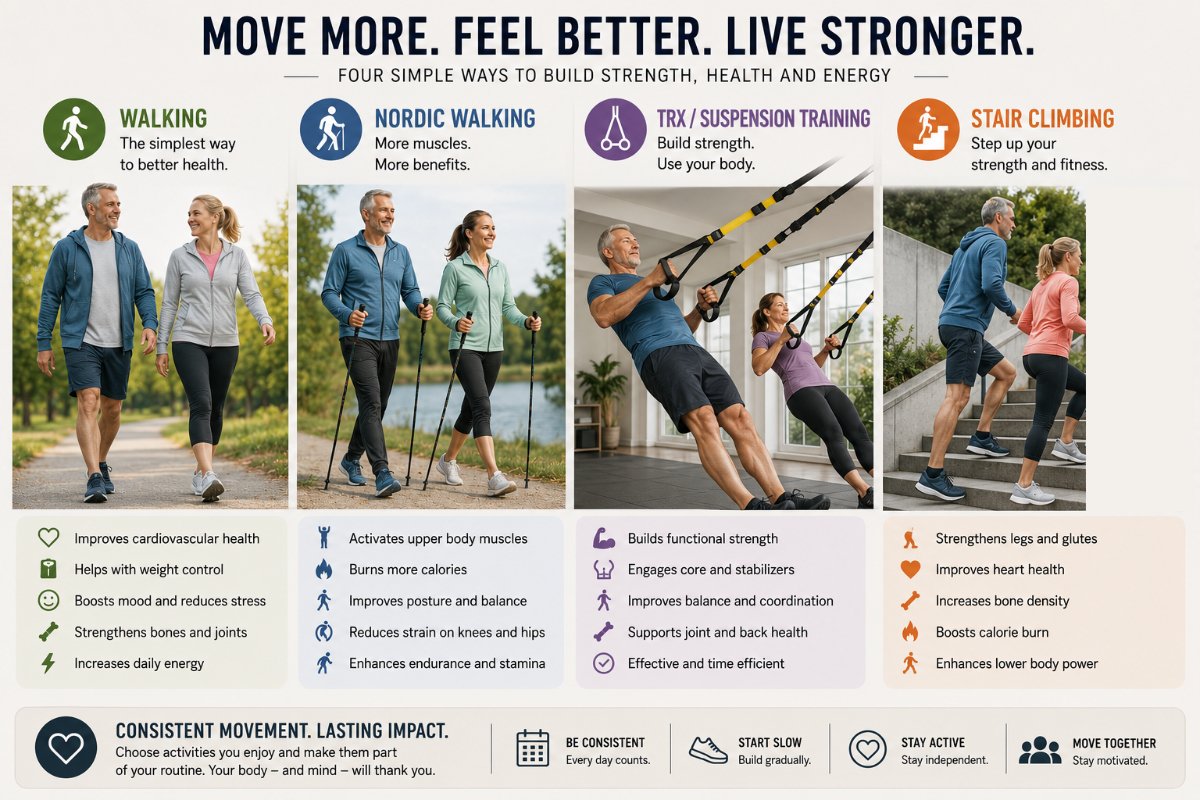
Move more – Feel better – Live stronger
Muscles: Strength Where It Counts
Cycling primarily targets the quadriceps, glutes, hamstrings, calves, and hip stabilizers. For an extra challenge, standing climbs engage your core, making it a full-body workout that builds functional strength.
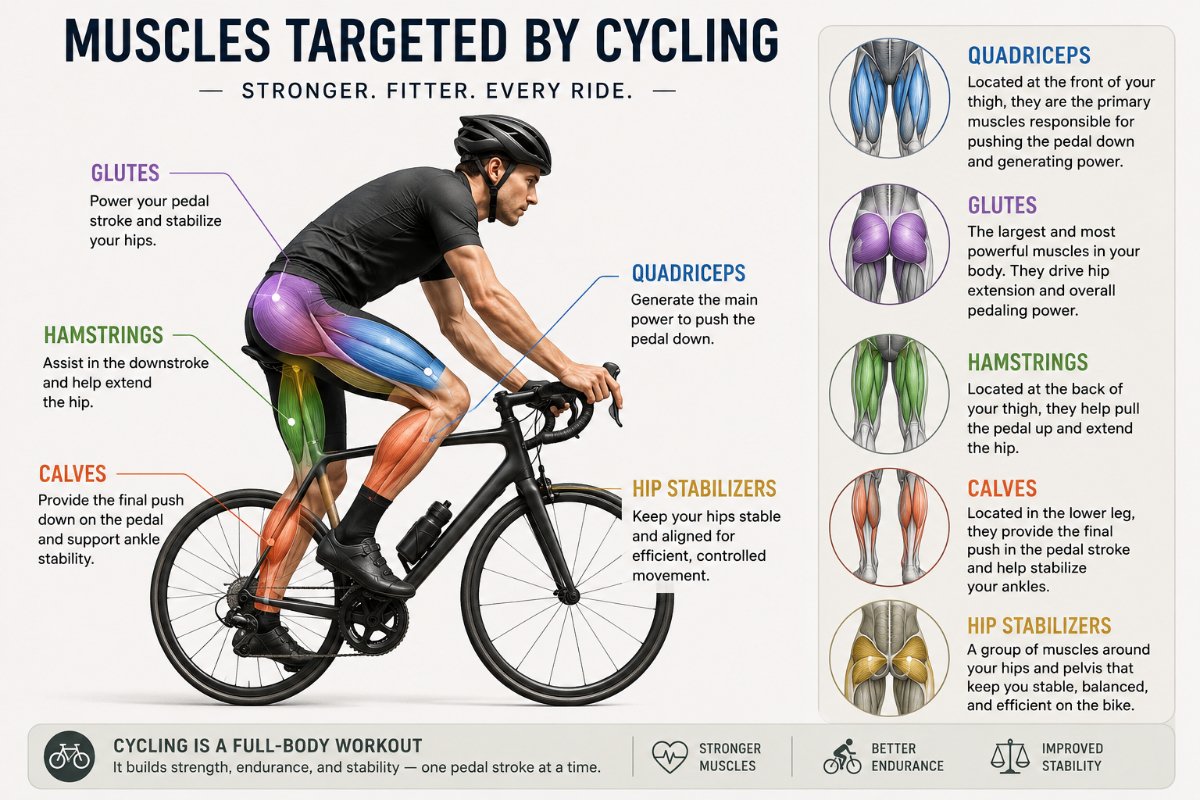
Muscles targeted by cycling
Cycling Through the Decades
40–50: Building a Foundation
This is the ideal time to establish a lifelong cycling habit. Focus on improving aerobic fitness, managing stress, maintaining a healthy weight, and active commuting. Recovery is still quick, and high-intensity sessions are well-tolerated. Perfect for laying the groundwork for the years ahead.
60–70: Preserving Independence
The focus shifts to maintaining VO₂max, preventing frailty, and preserving mobility and confidence. Intensity remains important, but recovery becomes paramount. Cycling keeps you moving freely and independently.
70+: Adapting Without Slowing Down
Cycling remains an excellent option if balance allows. The goal? Preserving function rather than chasing performance.
Hydration and fueling
Hydration needs depend more on duration and weather than age, although older adults often experience a reduced thirst response.
Some indicative basic tips for hydrating and fueling.
Hydration
- Under 60 minutes: Water is sufficient
- 60–90 minutes: Water works, but add electrolytes on warm days
- Over 90 minutes: Water + electrolytes. Start drinking before you feel thirsty
- Long rides, like 2-4 hours or more. Aim for 400-800 ml/h. Drink regularly rather than once
Fueling
- Under 1 hour: No extra food needed
- 1–2 hours: A light snack (banana, yogurt, toast) beforehand suffices
- Over 2 hours: You need carbohydrates during the ride (bananas, energy bars, dried fruit, rice cakes, gels for high-intensity efforts if any)
- Post-ride: Replenish with protein (20–30g), carbs, and fluids within an hour
Essential Gear for Driving
- Helmet: Non-negotiable for safety. See the video: https://www.youtube.com/watch?v=PZ1iK8LsCO0#ddg-play
- Gloves: Reduce hand numbness and improve grip
- Cycling shorts: A quality chamois prevents discomfort on long rides
- Glasses: Shield against UV, wind, and debris (*
- Lights: Critical for visibility, even during the day. Especially red rear light is essential on roads
- Repair kit: Spare tube, tire levers, mini pump or electrical, multitool
- Clothing: Layer up with moisture-wicking, breathable fabrics. Avoid cotton as it retains sweat and causes discomfort
*) Good tip: Yellow or amber cycling glasses are useful in cloudy, foggy, rainy or low-light conditions. They improve how your eyes perceive contrast. Yellow lenses filter out a portion of blue light. As a result, road cracks, potholes, road markings are more visible. Yellow lenses also reduce visual fatigue on longer rides.
Modern accessories give possibilities and make it easy to ride together, regardless of age – from babies all the way to grandparents. No matter when or where.
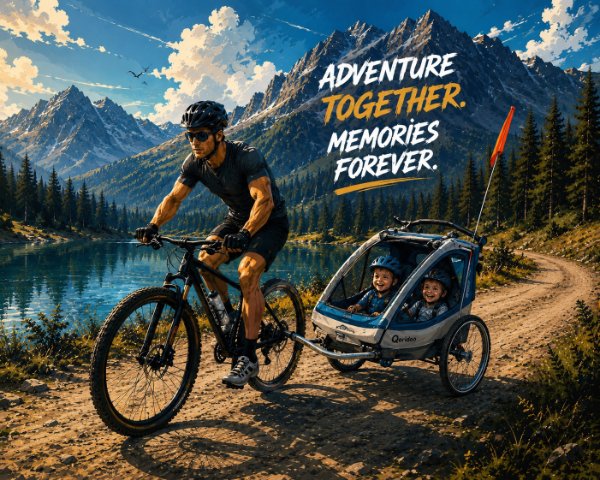
Adventure together. Memories forever
Final words
When combined with strength training, mobility work, and balance exercises, cycling becomes one of the most effective long-term activities for preserving cardiovascular health, cognitive function, mobility, independence, and quality of lifewell into your later years. So, grab your helmet, hop on your bike, and start pedaling toward a longer, healthier, and happier life.
Images created in cooperation with AI